
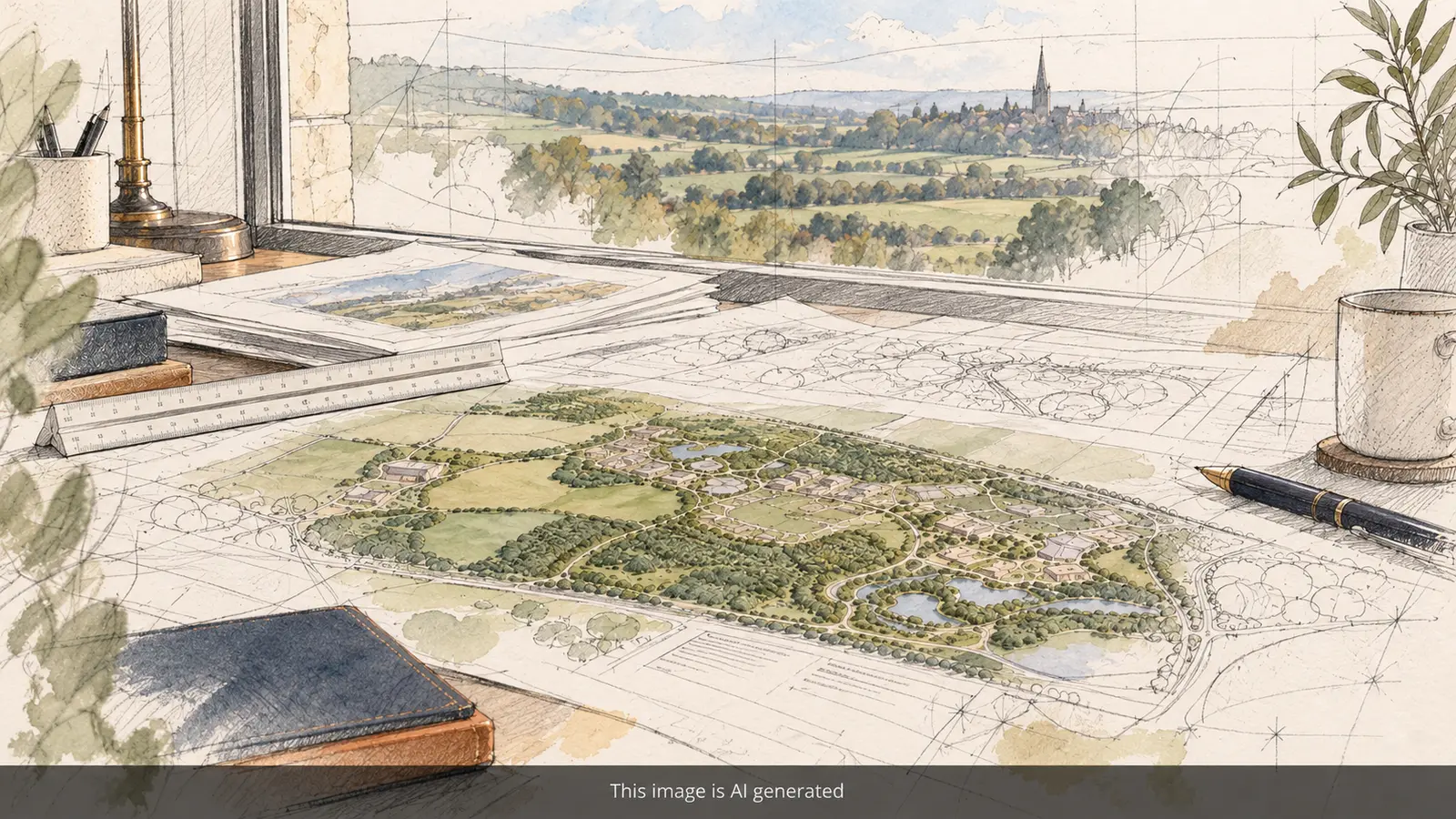
Puy du Fou UK has a live outline planning application for a proposed historical entertainment destination near Bucknell, north of Bicester. That is an important milestone, but it is not the same thing as an approval to start operating a theme park. For an accurate picture of the project’s progress, the place to look is Cherwell District Council’s application record rather than a headline, an old consultation leaflet or a projected opening date repeated online.
As checked on 15 October 2026, application 25/02232/OUT remains under consultation. The register gives 30 November 2026 as its target decision date, but has no committee date or decision notice recorded. Those details can change, so this guide explains how to check the evidence as well as what it currently says.
How do you find the correct planning application?
Open the council’s entry for 25/02232/OUT and confirm that it concerns land north and east of Manor Farm, Bainton Road, Bucknell, with Puy du Fou United Kingdom Limited named as applicant. This matters because the planning system may also contain other records relating to the surrounding area, roads or utilities, and a decision about one of them would not necessarily decide the main destination.
The ‘OUT’ suffix identifies the submission as an outline application, meaning that the council is being asked to decide whether the proposed development can be permitted on the basis of the submitted description, plans and assessments. The entry is marked all matters reserved, so further detailed applications would be needed after any outline approval before the full design could be settled.
What does the application cover?
This is much more than an application for several performance venues. The council’s project summary lists indoor and outdoor theatres, hotels, restaurants, period-related facilities, conference and operational buildings, animal facilities, parking, internal roads and paths, landscape work, water management and supporting energy and service infrastructure. The precise mix and presentation of visitor facilities would still be controlled by later plans and approvals.
Some readers understandably focus on the more eye-catching buildings on an illustrative masterplan, but such drawings are not visitor maps. They can show the design concept and broad spatial intentions without fixing the final wayfinding routes, a particular show’s storyline or the entrance a paying guest would eventually use.
Where should you look first in the application record?
The most useful order is to read the formal application description and current status, check the site-location and parameter plans, and then move to the planning statement and supporting assessments. The council record includes a Transport Assessment, Travel Plan, Environmental Statement documents and later amendments, including transport material submitted in July 2026. Checking the revision date is important: an early plan can have been overtaken by a later submission without disappearing from the register.
Consultation responses from public bodies, community groups and residents are part of the evidence that the council must consider. They may identify disputes over transport, drainage, landscape, heritage or other effects, but neither a supportive letter nor an objection is the council’s final judgement. When reporting a claim, we should say who made it and whether it has been accepted, revised or formally determined.
What does ‘under consultation’ actually mean?
It means that the application has not yet reached a final recorded decision on the register. The process can include public representations, technical discussions, requests for amended information and review by planning officers and consultees. With a project of this scale, the volume of material and the need to assess different impacts can affect the timetable without telling us whether an eventual approval or refusal is more likely.
For the same reason, the target decision date of 30 November 2026 should not be mistaken for a guaranteed committee meeting, a construction start or a ticket-sales announcement. The definitive evidence of an approval or refusal would be a decision recorded by the council, accompanied by the appropriate notice and conditions.
What would happen after an outline approval?
Approval at outline stage would establish an important planning principle, subject to the decision’s parameters and conditions. It would not automatically sign off the appearance, scale and layout of every building or the detail of the future shows. Reserved-matters submissions and other requirements may follow, and relevant pre-commencement conditions would have to be addressed before particular works could proceed. Opening to visitors would then depend on construction, commissioning, staffing and the operator’s commercial decisions.
Equally, if an application is refused or delayed, the accurate story lies in the formal reasons and the applicant’s response. It would be speculative to interpret a missed target date as the end of the proposal or to predict an opening year from administrative milestones alone.
How to stay informed without checking every document
For most readers, the key milestones are a published officer report, any committee agenda or date, a decision notice, significant changes to the scheme and subsequent reserved-matters applications. A newly uploaded consultation comment is not necessarily a development that changes a visitor’s plans. We will update this standing guide and the project timeline when a documented change materially affects the project’s status.
For a broader explanation of the destination itself, see our Puy du Fou UK guide, the masterplan explainer and the guide to confirmed, proposed and unknown details. These pages distinguish what the developer intends to build from what is legally approved or available to visitors.
Sources and status
Primary sources: Cherwell planning register, 25/02232/OUT; Cherwell’s project information; Puy du Fou UK proposals. Status checked 15 October 2026. Details may change after this date.