
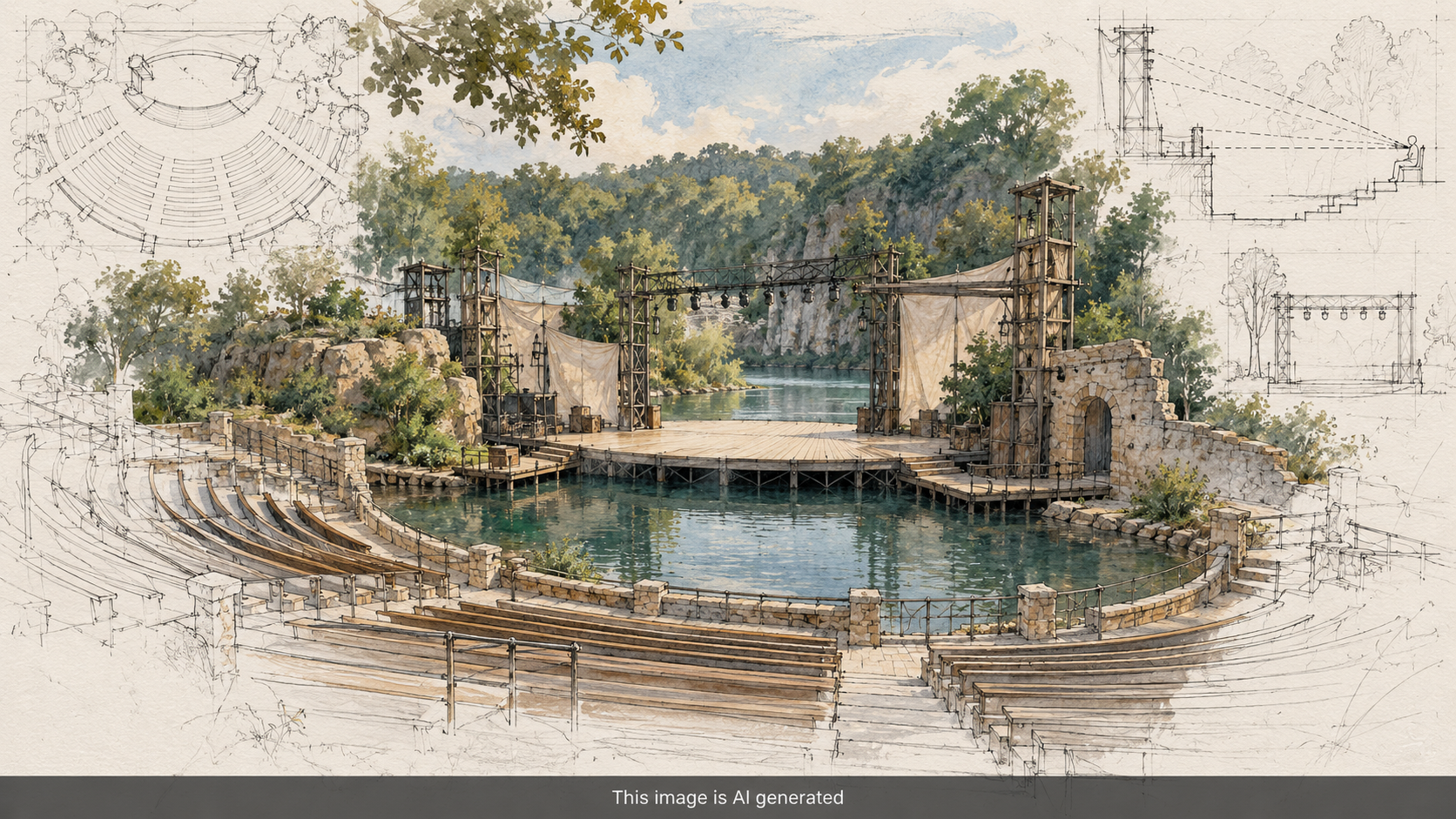
Anyone expecting Puy du Fou UK to resemble a conventional roller-coaster park may be surprised by what is actually being proposed. The destination planned for land near Bucknell, north of Bicester, follows Puy du Fou’s established approach to entertainment: visitors move through historical settings and watch large-scale live performances, rather than spending the day collecting rides. That distinction is central to understanding both the project and the kind of visit it might eventually offer.
The developer’s current UK proposals are unusually specific about the broad format: 13 live shows, comprising six outdoor and seven indoor productions, together with four period villages. Those figures describe what is proposed, not a line-up of attractions that has received detailed approval or gone on sale. The outline application remains under consultation at Cherwell District Council.
What sort of experience does Puy du Fou create?
At Puy du Fou’s established destinations in France and Spain, historical stories are brought to life through purpose-built environments, staged performances and immersive encounters. A day is therefore shaped by showtimes and the journey between venues. It can feel closer to visiting an enormous collection of theatrical productions and living-history settings than to a traditional British amusement park, although the scale and spectacle are considerably different from a conventional theatre visit.
Examples from the official French park include large outdoor productions, indoor theatrical experiences, night shows and environments inspired by different periods of history. They demonstrate the operator’s methods, but they are not a confirmed British programme. We cannot responsibly infer that a show performed in France will be reproduced in Oxfordshire, or assign a particular British historical period to any of the proposed venues.
What is actually proposed in Oxfordshire?
The current plans describe six outdoor and seven indoor shows. The indoor-outdoor balance matters because weather can influence the experience of a British visitor, but an indoor theatre does not automatically guarantee every performance will run in all conditions. The operator would need to publish practical information about venue access, seating, performance times and any restrictions before visitors could plan their day with confidence.
Four period villages are also proposed. These would help give visitors somewhere to explore between performances, potentially making the destination feel like a broader historical environment rather than a timetable of shows alone. The developer has not published the complete visitor map, individual show names or a final historical narrative for each village, so descriptions of precise streets or sets remain speculative.
The planning application also includes facilities such as stables and aviaries. This is evidence that animal-related infrastructure forms part of the proposal; it is not evidence of which species would appear in a particular public show or how they might be used. The same caution applies to dramatic effects, stunts and moving scenery: those techniques are part of the operator’s wider reputation, but individual British productions are still unannounced.
Will there be roller coasters or conventional rides?
Roller coasters are not the defining feature of the Puy du Fou model, and the British proposal is presented as a historical live-show destination. It would therefore be misleading to advertise a ride line-up or suggest that the number of theatres is a count of roller coasters. As the project progresses, any individual attraction should be described using the developer’s own published information rather than assumptions drawn from other parks.
How might a day at the park work?
A show-led destination calls for a slightly different approach to planning. Rather than arriving with a list of rides to queue for in any order, visitors may eventually need to work around fixed performance times, consider how far apart venues are and leave room for meals or breaks. Families may also want to know how loud, long or intense a particular production is before choosing it for younger children.
At its French park, Puy du Fou offers a daily show programme and an app to help guests organise their visit. That is useful background about how the operator works, not a promise that the future UK park will offer identical booking systems, reserved seating or show frequencies. The right advice for a British visit can only be written once the UK operator publishes its own programme.
What remains uncertain?
The outline proposal provides meaningful information about scale and broad facilities, but it does not establish the final names, stories or technical contents of the shows; the detailed layouts of the period villages; the opening-day programme; admission prices; or a confirmed opening date. Those questions should not be answered by copying overseas attractions into a British itinerary. The proposal’s current planning status also matters: outline consent, if eventually granted, would not remove the need for further design and implementation decisions.
Where to follow the proposal
For the developing UK project, start with our Puy du Fou UK guide, which brings together location, opening and visitor-planning information. Our confirmed, proposed and unknown guide explains how to judge individual claims, while the planning application page tracks the formal decision process. For evidence about the planned numbers and facilities, use the developer’s proposals and Cherwell’s live application record, rather than undated social-media interpretations.
Source check: 15 October 2026. This article describes a proposal, not an operating park. Image is AI generated.