How a New Theme Park Is Built: From Groundworks to Opening
A major theme park does not rise in a neat line from empty field to roller coaster. It is delivered through overlapping programmes of planning, earthworks, utilities, buildings, ride systems, landscaping, technology and operations.
That makes early construction easy to misread. Months of drainage, ground stabilisation or utility work can look uneventful from outside the fence, yet those stages can determine whether everything above them works later.
This article explains the typical sequence for a large destination resort. It is a general industry guide, not Universal UK’s confidential construction programme. For the Bedford project, only information published by Universal or public authorities should be treated as a confirmed milestone.
1. Planning and site investigation
Before heavy construction, teams need to understand the land and the rules that shape it. Surveys can cover ground conditions, ecology, drainage, archaeology, utilities, noise, traffic and contamination. Designers also test how buildings, access roads and infrastructure fit together.
Planning approval does not freeze every creative detail. Large projects often move from an overall consent and environmental assessment into more detailed packages, conditions and management plans.
Universal says an Outline Construction Management Plan and Environmental Impact Assessment formed part of its approval process, with more detailed construction management plans expected for relevant phases. Our Universal UK planning permission guide explains the project-specific route in more detail.
2. Enabling works
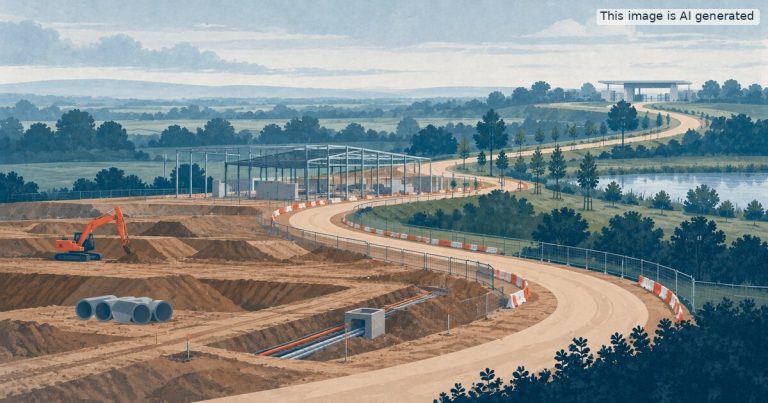
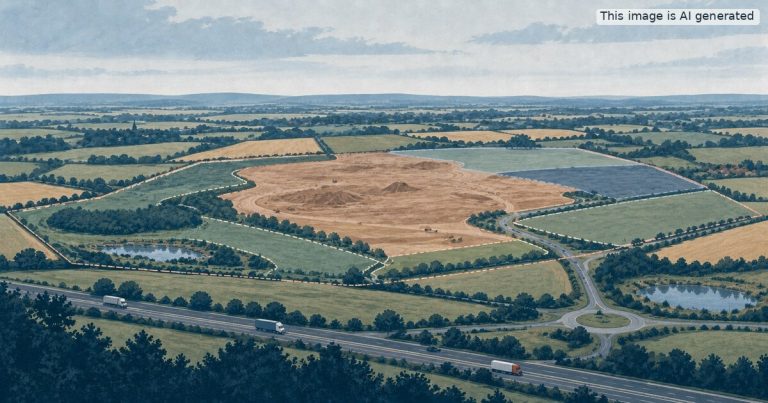
Enabling works prepare the site for the main build. They may include secure access, temporary roads, compounds, fencing, vegetation management, demolition, ground stabilisation, utility diversions and earth moving.
These works can be substantial even when no attraction structure is visible. They create safe access for workers and machinery, make the ground suitable for later loads and clear conflicts that would otherwise slow construction.
Universal confirms that initial enabling works are underway at the Bedford site. Its Community Updates page carries current information on local roads, footpaths and infrastructure impacts. Those notices are time-sensitive, so use the live page rather than an old screenshot.
3. Drainage, utilities and earthworks
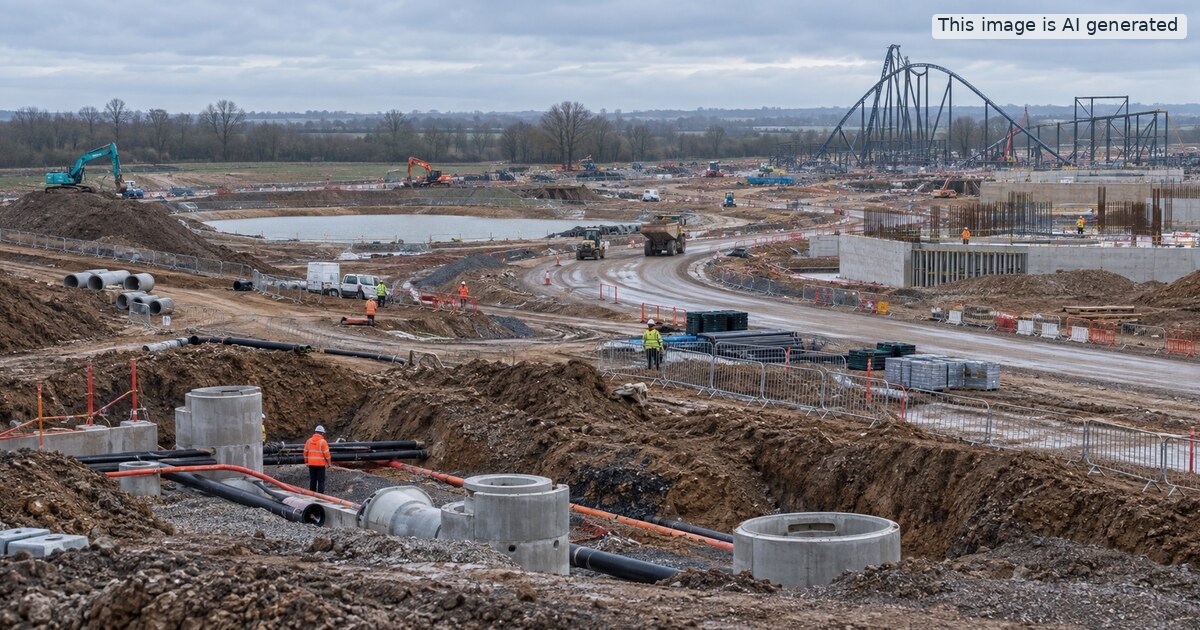
Theme parks use huge networks that guests rarely see. Power, water, foul drainage, surface-water management, data, fire systems and service routes need to reach buildings and outdoor areas without obstructing future maintenance.
At the same time, earthworks create stable levels, manage water and shape the landscape. Even a visually natural hill or lagoon may be the product of precise engineering.
This work is particularly important on a large mixed resort because attractions, hotel, retail, kitchens, workshops and back-of-house operations have different demands. Much of it must be coordinated before themed surfaces hide the infrastructure.
4. Roads and the back of house
A park needs two circulation systems: the guest-facing world and the operational network behind it.
Back-of-house roads and buildings support deliveries, waste, maintenance, food preparation, staff facilities, security and emergency access. Their position affects everything from morning inspections to how quickly a restaurant can be restocked without a trolley crossing a themed street.
Public roads, junctions, rail connections and active-travel routes sit outside or around the resort but can be just as critical. Universal has announced an expanded Wixams station, direct A421 slip roads and local improvements as part of the Bedford project. The detailed sequence and delivery responsibilities will develop separately from individual attractions.
5. Buildings and ride foundations
Ride foundations are designed around specific forces, ground conditions and equipment. A coaster support, theatre, dark-ride building and observation attraction can impose very different loads.
Some attractions arrive as a visible steel or concrete system. Others are largely hidden inside a show building. In both cases, the building, ride, evacuation routes, fire systems, access platforms and scenic design must be coordinated.
Seeing vertical steel is therefore only one marker of progress. A plain warehouse-like shell can contain highly complex work, while a dramatic outdoor structure may still need months of systems integration.
6. Ride installation and systems integration
Once foundations and buildings are ready, specialist teams install track, vehicles, control hardware, lifts, brakes, doors, restraints, show equipment and other systems.
The ride does not exist in isolation. Audio, lighting, projection, physical effects, show control, accessibility arrangements, queue systems and operational communications may all need to work together.
Integration is where interfaces become crucial. A technically complete ride mechanism is not a complete guest experience if the platform doors, fire alarm response, dispatch logic or show sequence have not been commissioned as a whole.
7. Theming and landscaping
Scenic finishes turn engineered spaces into believable environments. Teams may use carved coatings, rockwork, facades, props, paint treatments, planting, water and carefully controlled sightlines.
This work often overlaps with technical installation. Themed elements need maintenance access, fire performance, drainage and structural support. Plants need time to establish and must suit the local climate and operating environment.
The most convincing result usually hides considerable practical discipline. A beautiful wall may contain access panels; a woodland edge may screen a service road; a decorative roof may conceal ventilation and show equipment.
8. Testing, commissioning and training
Buildings, utilities, kitchens, security systems, ticketing, rides and emergency arrangements all need commissioning before opening. Ride testing is only one part of that wider process.
Teams verify equipment, run scenarios, train staff and refine procedures. Independent inspections and certification may apply to amusement devices, while building and operational systems have their own requirements.
Our guide to how theme parks test rides explains that process separately. Crucially, testing is not a single moment and a soft opening is not proof that every final detail is fixed.
9. Opening is a phased operational milestone
A resort can be physically impressive and still not be ready for a full public opening. Recruitment, training, supply chains, rehearsals, accessibility checks, cleaning, landscaping and digital systems all need to hold up under real operating pressure.
Some venues use previews or limited opening periods to learn from controlled audiences. That can help teams tune capacity and procedures, but the format varies and should not be assumed for Universal UK unless announced.
What to look for at Universal UK
Useful public indicators include formal planning submissions, enabling-work notices, road and utility packages, large contracts, visible foundations, vertical construction, recruitment and official attraction announcements.
Each signal answers a different question. A road closure may show activity without revealing a ride. A supplier appointment may reveal a work package without confirming the theme. A structure may be recognisable only after official context appears.
The safest way to follow the build is to compare official community updates with our Universal UK construction updates page and map, while keeping general industry knowledge separate from project fact.
For the wider project picture, visit our Universal UK hub.
Sources
Universal UK Project — confirmed project scope and construction FAQs
Universal UK Community Updates — live enabling works and local notices
Health and Safety Executive — fairgrounds and amusement parks guidance
Construction (Design and Management) Regulations 2015 — UK construction duties
Theme Park Trip — Universal UK construction updates
Theme Park Trip — planning permission guide